The construction industry is currently lost in a thick, confusing green fog. But the time of vague environmental claims and green leafy logos is over. Specifiers today grapple with rigorous energy codes, demanding client sustainability targets, and a planet in peril. And to get it right, you need hard facts, not marketing spin.
So, what actually is sustainable window manufacturing?
We’re no strangers to being environmentally conscious:
We’ve spent years sharpening our product sustainability through rigorous Life Cycle Assessments (confident in the exceptional performance of our windows). And, we were the first window company to create Environmental Product Declarations for each individual product. Yet, recently, we realised it was time for a long, unfiltered look at our own factory…
Now, we’re sharing our 2024 emissions baseline with the world.
And we’ll be completely up front: we’re not perfect…yet. But by sharing every detail, we’re committing to radical transparency, because nothing else will truly cure industry greenwashing. After all, you can’t fix what you’re not willing to face. Now that we know the nitty-gritty, we can get to sorting it. Only then can we meet our carbon-negative 2030 goal!
In this breakdown, you’ll discover the critical differences between popular measurement methodologies and the reality of our operational carbon footprint. We’ll unpack the frustrating paradoxes of carbon accounting… while also showing you how impending regulations are set to force the industry to come clean at last.
What is greenwashing in the construction industry?
Consider this: the building sector accounts for nearly 40% of global energy-related carbon emissions. Our industry carries enormous responsibility (yet, many companies choose the easy option over the ethical one).
The construction sector has been plagued by greenwashing for years. Many companies add eco-labels to products that are far from planet-friendly in an effort to win business. Let’s be clear about the key issues:
- Greenhushing: Hiding or downplaying real sustainability data to avoid scrutiny.
- Greencrowding: Blending in with low performers, hoping not to be the one caught out.
Specifying poor products puts architects at serious financial and reputational risk. If you trust the wrong brochure, without verified data, your entire retrofit project’s carbon strategy could fall apart.
Regulators are increasing clarity. From April 2025, the Competition and Markets Authority gained sweeping new powers to punish misleading green claims, with fines of up to 10% of global turnover. Hopefully, that will provide real deterrence, and the days of hiding behind unsubstantiated “eco-friendly” buzzwords are ending.
So, what does a genuine eco window require? It calls for verifiable data, comprehensive lifecycle analysis, and a manufacturer who is unafraid to be brutally honest about their supply chain (even where it highlights challenges or imperfections).
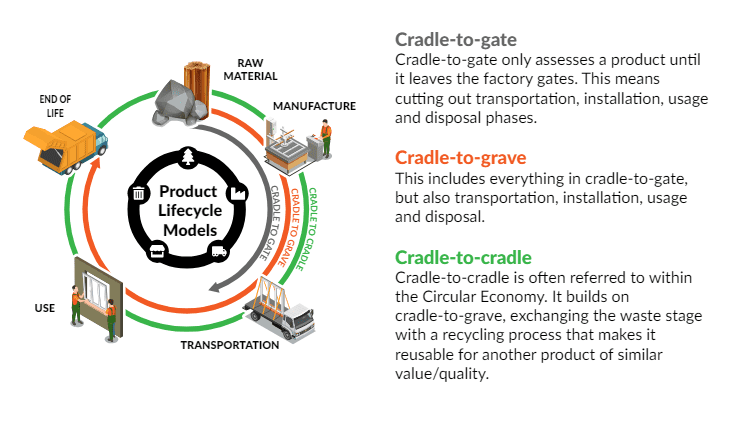
Why is a Cradle-to-Grave LCA better than Cradle-to-Gate?
Life Cycle Assessments (LCA) measure a product’s environmental impact. However, not all LCAs are created equal:
A Cradle-to-Gate assessment only covers a product from the extraction of raw materials to the factory door. It misses a product’s entire lifespan (the decades of energy savings a high-performance window provides, as well as the end-of-life disposal challenge).
That’s why we choose the Cradle-to-Grave approach: it tracks every stage, from raw material extraction, through manufacturing and transport, to use and final disposal.
When we compared our Classic Hardwick, Heritage Richmond, and Frontier Acadia ranges to market norms, one truth was clear: our timber windows dramatically outperform uPVC and aluminium alternatives in Global Warming Potential.
Now we have Cradle to Grave Life Cycle Assessment data for all of our products and use it as part of our continuous product improvement.
How are Gowercroft Windows and Doors Built to last?
Take our hardwood Red Grandis (its carbon balance is so positive at the source that the carbon absorbed during growth outweighs extraction emissions). In comparison, aluminium involves damaging bauxite extraction… and uPVC depends on depleting fossil resources.
Every aspect of our windows (materials, design, and support) has been a conscious choice to guarantee lasting performance. Nothing is accidental. We rule out materials like slimline glazing and oak because they cannot meet our standards. LandVac vacuum glazing is specified for Heritage and Frontier Ranges because it offers proven results and a 25-year warranty, verified by real-world tests. Accoya timber gives a 60+ year lifespan, is certified, and stays stable and low-maintenance; Red Grandis offers a sustainable, long-lived hardwood alternative. Our microporous coatings extend timber life further, making ongoing care simple and effective. With Timbacare aftercare taking care of your windows and doors forever and a 10-year warranty that includes workmanship too, we back up our promises with real action. This is how we build windows that are designed to last and perform, not by chance, but because every step, from process to material, is chosen for that purpose. Unlike PVC or aluminium, whose fossil-based or high-energy materials fall short in both lifespan and recyclability, our timber windows offer genuine carbon benefits, easy maintenance and true heritage value backed by data. That’s the difference you can see, feel and prove.
We build our products to last 70 to 80 years, because replacing history with landfill fodder isn’t progress. A plastic window with a shorter life (one that’s not recyclable) is a liability, not a solution. Real sustainability lies in building what lasts.

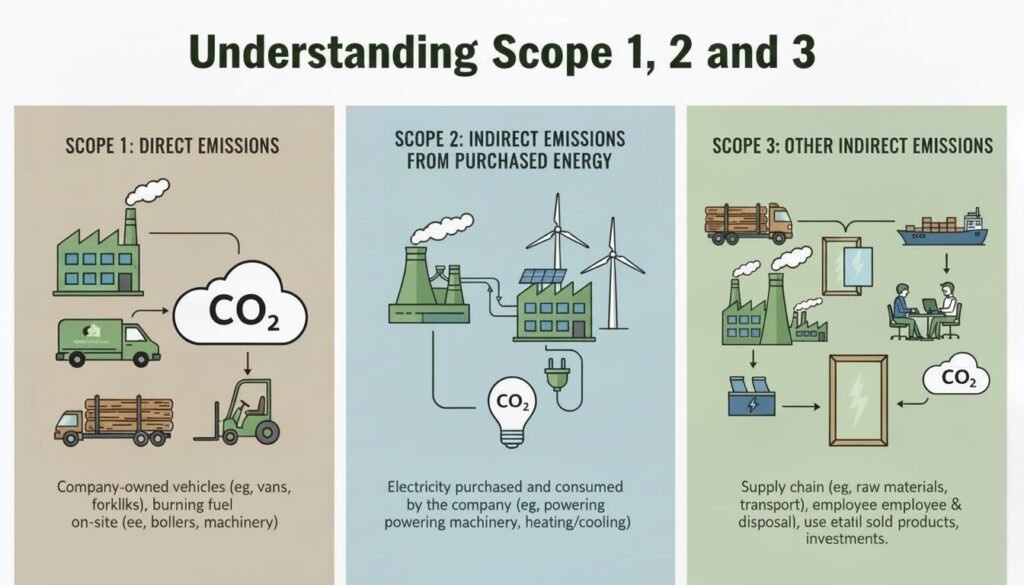
How do businesses assess their Carbon Footprint?
Scope 1 emissions are direct emissions produced by sources a company owns or controls.
Examples in timber window manufacturing:
Fuel used in factory machinery or biomass heaters
Diesel or petrol used by company vans delivering windows
Forklifts operating within the workshop
On-site heating systems powered by gas or fuel.
Scope 2 emissions are indirect emissions from purchased energy.
Examples in timber window manufacturing:
Electricity powering CNC machines, saws, and sanding equipment
Energy used for spray booths and drying rooms in the coating process
Lighting across the factory and office
Heating or cooling powered by purchased electricity
Scope 3 emissions are indirect emissions across the supply chain.
Examples in timber window manufacturing:
Timber sourcing (e.g. harvesting, processing, transport of Accoya or Red Grandis)
Production and transport of vacuum glazing units
Paints, coatings, gaskets, and ironmongery purchased from suppliers
Delivery of materials to the factory and finished windows to site
Employee commuting and business travel
Waste disposal from offcuts and packaging
The lifetime use and eventual disposal of the windows
For most manufacturers, this is the majority of emissions.
What is Gowercroft Joinery’s carbon footprint?
For total clarity, we’re publishing our 2024 emissions data without excuses. This is what goes into crafting a leading, timber window (see details below):
- Total measured emissions for 2024: 924 tonnes CO₂e
- Team size: 55 people (about 16.7 tonnes per employee)
- (For comparison, the UK manufacturing average is 30.3 tonnes per employee)
Here’s the exact breakdown:
- Scope 1 direct emissions: 88 tonnes (gas for heating and owned vehicles)
- Scope 2 indirect energy emissions: 49 tonnes (purchased site electricity)
- Scope 3 value chain emissions: 787 tonnes
Our top polluters:
- Purchased timber (318 tCO2e)
- End-of-life treatment of sold products (121 tCO2e)
- Scope 1 (88 tCO2e)
- Business travel (87 tCO2e)
- Purchased paint (80 tCO2e)
Let’s address the elephant in the room: 85% of our emissions fall into Scope 3. Nearly half (49%) comes from buying timber, glass, and paint. End-of-life treatment for products adds 121 tonnes on its own.

How can we reduce Scope 3 emissions in window manufacturing?
Tackling Scope 1 and 2? That’s the easy part: upgrade vehicles, insulate, buy green energy. Scope 3 (however) is much tougher to address.
Consulting on reduction
We’ll be frank: we don’t have all the answers yet for cutting the carbon tied to our critical materials. You cannot manufacture an eco window without highly technical paint and specialised glass.

High-performance vacuum glass takes lots of energy to make, as does transporting it from China. The obvious solution may seem to be to search for an alternative closer to home, but we are yet to find another vacuum glazing option that comes close in quality, efficiency and longevity and to compromise that would have carbon consequences later down the line.
Instead, we will be consulting closely on targeted emission reductions first, finding out from the experts where we can make savings. Offsetting will come into play when we can’t make any more savings without damaging the integrity of our products.
Owning the gaps in our knowledge
True expertise means acknowledging what you do not know yet. Fudging the numbers to look good is a coward’s game.
We are working with our supply chain to demand better data from our glass and paint providers. We are pushing for radical transparency from the people who sell to us so that we can identify areas to save carbon.
Our overall strategy?
Focus first on true reductions. Offsetting will only be considered as a last resort (and only for emissions we genuinely cannot eliminate without negatively impacting our product quality and integrity).
Expertise means recognising your knowledge gaps. Facing a 787-tonne Scope 3 total and getting to work is the straightforward approach we stand by.

What is the Greenhouse Gas Net-Zero paradox?
There’s a maddening (but vital) quirk in the Greenhouse Gas Protocol regarding how overall business emissions are reported.
Picture this: replace a draughty, single-glazed historic window with one of our Heritage Range vacuum-glazed units (and you slash heat loss). Over its lifespan, each window saves 7.5 to 11 tonnes of CO₂ equivalent by improving a building’s thermal performance.
These are known as “avoided emissions” (they represent a significant win for retrofit architects striving to balance building physics with carbon targets).
Here’s the catch: carbon accounting rules prevent us from using those avoided emissions to offset our operational manufacturing footprint (even though they make a genuine difference to overall impact).
It stings to know your product spends 80 years actively fighting climate change but can’t balance your books, so to speak.
Still, it’s right. A truly sustainable product does more than just show off its green credentials at the end; it also demands a clean record at the factory. We can’t rest on our windows’ merits and ignore inefficiencies at home.
Frequently asked questions
A window is sustainable when it offers a long lifespan, uses ethically sourced materials, and provides excellent thermal efficiency. Cradle-to-Grave data is essential for proving these claims.
It only measures the carbon impact up to the point the product leaves the factory. It completely ignores how the product performs in a building and what happens when it is eventually thrown away.
Our timber windows achieve exceptional whole-window U-values. This drastically reduces the amount of heating required to keep a heritage property warm over its 70 to 80-year lifespan.
For heritage properties, timber offers strength and authenticity that uPVC simply cannot match. Timber windows last longer and don’t create the disposal issues associated with plastic, making them the responsible choice for long-term value.
Vacuum glazing delivers best-in-class insulation while maintaining slim profiles suitable for conservation areas. This technology significantly enhances energy retention without compromising aesthetics.
Species like Red Grandis and Accoya sequester more carbon during growth than is released in processing, resulting in a genuine net-negative impact. In contrast, metals and plastics add to the carbon burden from the outset.
Yes, because lifetime carbon savings outweigh production emissions. Our LCAs and Environmental Product Declarations provide full disclosure to support our claims.
How can architects specify sustainable windows with confidence?
Transparency in sustainability is essential for retrofit architects. You balance modern efficiency standards with heritage aesthetics: you need products that perform well and do not contribute to climate change.
Here’s what to do when a supplier says their window is “sustainable.” Ask for their data. Does their lifecycle assessment span cradle to grave? Do they calculate Scope 3 emissions? If they hesitate or are unable to share specific evidence, that tells you all you need to know.
We invite scrutiny: ask for our full Cradle-to-Grave Life Cycle Assessment reports, review our Environmental Product Declarations, explore our window U-values, and ask us questions about any of our data and assumptions – we can answer them.
Don’t settle for green fog. Talk to our technical team about specifying a genuine, data-backed timber window for your next project (one you, your clients and the planet can trust).